Should I rush to be more productive? What about slow productivity?
How I traded a default of pushing harder for a system that protects deep work, rest, and the result I actually want.
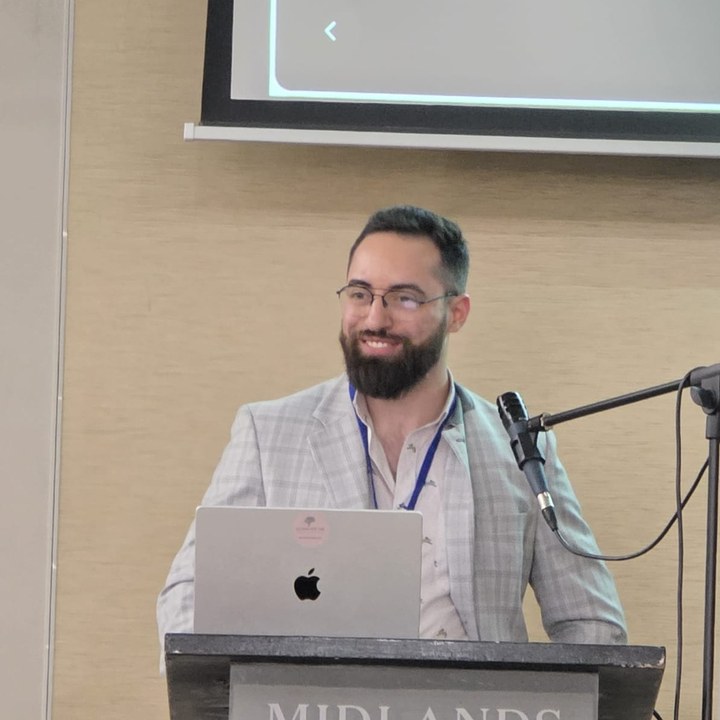
Rushing to finish a project and starting multiple ideas at the same time was part of my daily life for years. I had a push perspective towards productivity, and I still slip into it sometimes. But I am working on changing this — and Carl Newport’s book Slow Productivity has been helping a lot.
Sometimes, being slower can give you more joy and get more things done than rushing to finalise everything.
The journey to find work-life balance and improve how I deal with my time has been an area of constant improvement, and I learned a few things that, had I known them seven years ago, would have saved me so much time and effort. So here is what I want you to take from this post:
- How to implement slow productivity in your next project.
- How to change your perspective towards success.
- How slowing down for a minute can make you more efficient — not less.
Where the rushing came from
I am originally from a small country town in São Paulo, Brazil. My family runs a business. So I was embedded in an environment where everybody was always busy — already starting the next project while finishing the other ten activities they needed to deliver. The norm was to work continuously to accomplish goals as fast as possible because we needed to earn money.
I remember that the concept of the weekend was not part of my world. We had family time, but it was combined with extra work from the week. My parents had to work to continue paying for my education, and I understood why they needed the extra hours. I am extremely grateful for everything they did for me.
The point of this story is that sometimes we learn that the norm is to keep pushing towards new goals and to work extra hours to meet our own — or society’s — expectations. So I invite you to pause: are you rushing every time to hit a target? Are you happy with how you approach your work? Are you pushing hard simply because that is what you were taught was normal?
The question that pulled me back
I only started reflecting on this in recent years. Thanks to my fiancée, I started understanding that I had no real break from my work. Before, my week looked like lecturing, writing, and working on multiple data-science projects on weekdays — and the same on weekends. I remember visiting her and bringing my laptop along to run some simulations or write a paper.
A simple question helped me see that I was losing myself in the chaos of rush productivity: “Babe, you always look tired. Are you okay?” That question brought me back to my young self, asking the same thing — with worry — to my parents. At that moment I realised I had gravitated to constantly pushing and working extra hours to chase unclear expectations. It was time to change focus.
What result are you actually looking for?
Sometimes we need help navigating the sea of new goals and projects that must be completed as soon as possible. We need to pause and contemplate what we genuinely desire. Such a simple question, yet deeply profound.
I decided to do my work with purpose and a clear understanding of why. My ultimate result is to revolutionise statistics through transformative teaching and transdisciplinary research — to embody, for myself and for others, the pinnacle of academic fulfilment as a transformative professor. That is the version of me I am building toward: someone who can hold multiple projects and still be a machine of happiness. What is yours?
To be a machine of happiness, I need a balanced life. So I had to upgrade the skills that get me closer to that result — not just push harder at the old ones.
Six strategies for slow productivity
This clarity led me to Slow Productivity, and to six practices I now lean on. They are not new ideas — but, put together, they form a lighthouse that points where my week should go.
- Prioritise deep work. Focus on fewer, high-impact tasks rather than juggling numerous projects in parallel. Deep work produces better quality results and less cognitive fatigue.
- Set clear boundaries. Decide specific times for work and rest. Avoid the temptation to check emails or work during personal time.
- Declutter your schedule. Eliminate non-essential tasks and commitments. This frees up time for critical thinking and creativity.
- Embrace mindfulness practices. Incorporate techniques like meditation or simple breathing exercises to stay centred and increase concentration.
- Reflect regularly. At the end of each week, look back at what you achieved and how you felt. Use that signal to adjust the next week.
- Limit input. Be selective about the information and stimulus you consume. More input is often what keeps you away from meaningful work.
Redefining success
Success is more than the quantity of work you produce or the speed at which you tick boxes. Consider success as living a balanced life where there is time for your passions, your relationships, and your own growth. True success is finding fulfilment in both your achievements and your journey toward them.
Design your slow-productivity week
Three minutes. Six honest answers. You leave with a personal plan that pairs the right strategy to your strongest pain point — and a tiny exercise you can run this week.
From the post: Should I rush to be more productive? What about slow productivity?